
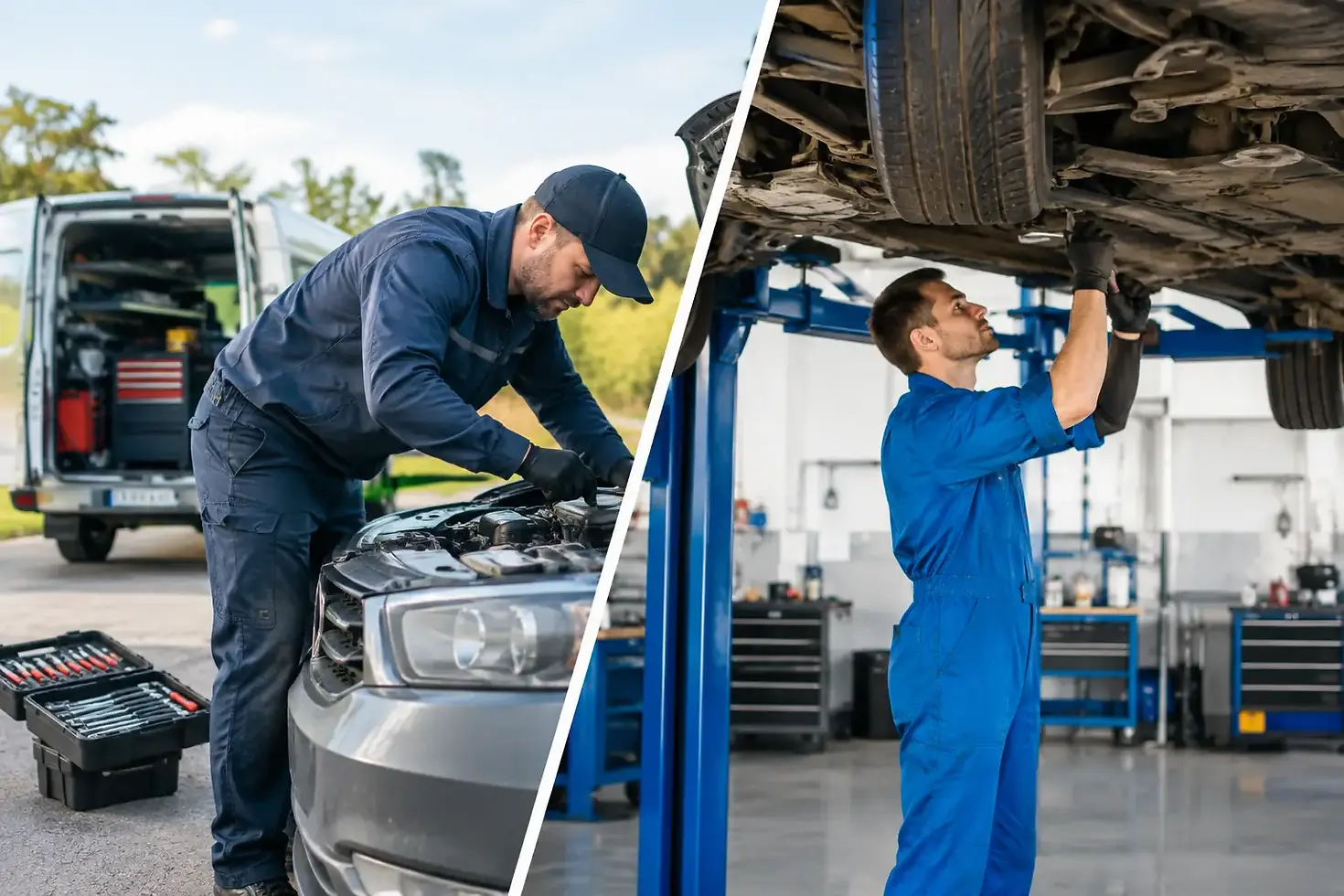
Mobile Fitter Versus Garage: Which Is Safer?

A tyre warning light on the way to work, a flat tyre outside the house or a sidewall split on the A13 creates one immediate question: mobile fitter versus garage - which is the safer choice? The answer depends on the condition of the tyre and where the vehicle has stopped. But if driving to a garage means travelling on a damaged or deflated tyre, staying put and arranging professional mobile assistance is usually the sensible decision.
A garage remains useful for planned tyre changes and jobs that need workshop equipment. A mobile tyre fitter is built for the moments when your vehicle cannot, or should not, be moved. Knowing the difference helps you act quickly without taking risks with your tyres, wheels or safety.
Mobile fitter versus garage for a puncture
A slow puncture can be misleading. The tyre may still look reasonably inflated, but it can lose pressure quickly once the vehicle is moving. Low pressure makes a tyre flex more than it should, generating heat and damaging the internal structure. By the time you reach a garage, a tyre that may have been repairable can be beyond safe repair.
A mobile fitter comes to the vehicle at home, work or roadside, assesses the damage and checks whether a repair is appropriate. A proper puncture repair is not simply a temporary plug pushed into the tread. The tyre needs to be removed and inspected internally so the technician can identify hidden damage caused by running low.
If the puncture is in the central tread area and the tyre has not been driven flat, repair may be possible. If there is sidewall damage, a large cut, exposed cords, damage near the shoulder or signs of internal deterioration, replacement is the safer outcome. Repair-first advice matters because it gives you a practical answer based on the tyre in front of the technician, not a guess over the phone.
When a garage is the right option
For planned work, a garage can be a perfectly good choice. Perhaps you have noticed your tyres are approaching the legal tread limit, want to change a full set before a long journey, or have time to leave the vehicle for an appointment. A fixed site may also suit jobs beyond tyres, such as suspension, brakes or alignment work.
The key point is that the vehicle must be safe to drive there. A tyre with legal pressure, no visible damage and no vibration or handling issue can normally be taken to a garage as part of a planned visit. Check pressures before setting off and inspect the tyre walls as well as the tread.
Do not assume a garage journey is safe merely because it is short. A few miles on a flat tyre can ruin it. It can also damage the wheel rim, affect the vehicle's handling and leave you stranded somewhere less safe than your driveway or workplace car park.
When a mobile fitter is the safer choice
Mobile tyre fitting is not only about convenience. It can prevent a damaged tyre becoming a more serious problem. It is particularly useful when the car is parked safely but cannot be driven, or when stopping to deal with the issue at a tyre depot would disrupt work, family plans or a delivery route.
Call a mobile tyre fitter rather than driving to a garage if the tyre is fully flat, visibly cut, bulging, losing air rapidly or has been driven while underinflated. The same applies if a warning light has appeared and you cannot find the cause, if a locking wheel nut is preventing a wheel change, or if your spare is missing, unsuitable or flat itself.
Roadside situations need extra care. On major routes such as the A12, A13, A130 and M25, stopping in an unsafe position can be more hazardous than the puncture itself. Move only as far as necessary to reach a safe place, if the vehicle remains controllable. Use your hazard lights, keep passengers away from moving traffic where possible, and avoid attempting a wheel change on a live carriageway or narrow hard shoulder.
A 24/7 mobile service means you are not waiting for normal garage opening hours after an evening puncture, an early-morning commute problem or a weekend tyre failure. The aim is straightforward: assess the tyre where it is, carry out a safe repair where possible, or fit a suitable replacement and get you back on the road.
Convenience matters, but so does equipment
A common concern is whether a mobile fitter can offer the same standard as a garage. For most tyre work, a properly equipped mobile unit can inspect, remove, repair and fit tyres at your location. That includes fitting new tyres, repairing suitable punctures, balancing wheels and dealing with many locking wheel nut issues.
The advantage is that the service comes to the vehicle. There is no need to inflate a failing tyre just to limp to a depot, take time away from work or arrange a lift home. For tradespeople, delivery drivers and families with a full day ahead, that can make a significant difference.
There are limits, and a good technician should be clear about them. Wheel alignment, for example, requires specialist fixed equipment. If uneven wear suggests an alignment or suspension fault, a mobile fitter can identify the issue and advise that further workshop inspection is needed. That is not a shortcoming - it is the right call for safety and tyre life.
Choosing the right tyre at the roadside or driveway
A tyre replacement is not just about matching the size printed on the sidewall. The load rating and speed rating must be suitable for the vehicle, and the tyre must meet the required specification. Some vehicles also need particular markings or run-flat tyres. Choosing the wrong option can affect handling, insurance requirements and manufacturer guidance.
This is where direct advice helps. A mobile technician can confirm the existing tyre specification, explain suitable options across major brands and budgets, and source less common sizes where necessary. If two tyres are fitted on the same axle, they should be compatible in size and construction, with sensible matching of tread pattern and performance.
If only one tyre is damaged, the decision may depend on the condition of the tyre opposite it. A new tyre paired with one that is heavily worn can affect grip, particularly in wet conditions. You do not need a lecture on tyre technology at the roadside, but you do need honest guidance on what will keep the vehicle safe and legal.
Do not let a locking wheel nut delay a safe repair
A flat tyre becomes more frustrating when the locking wheel nut key cannot be found or has been damaged. Forcing the wrong tool onto the locking nut can damage the wheel, the nut and the chance of removing it cleanly.
A mobile fitter with the right removal equipment can deal with many locking wheel nut problems at the vehicle location. That avoids towing a car solely because the wheel cannot be removed and allows the tyre issue to be dealt with properly. Keep the replacement key in a known place afterwards, ideally with the vehicle documents rather than loose in the glovebox.
Make the decision before the tyre makes it for you
The practical rule is simple. Use a garage when the vehicle is safe to drive and the work can be planned. Choose a mobile fitter when the tyre is unsafe, the vehicle is immobilised, time matters or getting to a garage would create a bigger risk.
For drivers across Essex, Drive By Mobile Tyres Ltd can assess punctures, fit replacements and provide tyre assistance where the vehicle has stopped, day or night. If you are unsure whether a tyre can be driven on, treat uncertainty as a reason not to risk the journey. A quick professional assessment where you are can protect the tyre, the wheel and everyone in the vehicle.


Comments